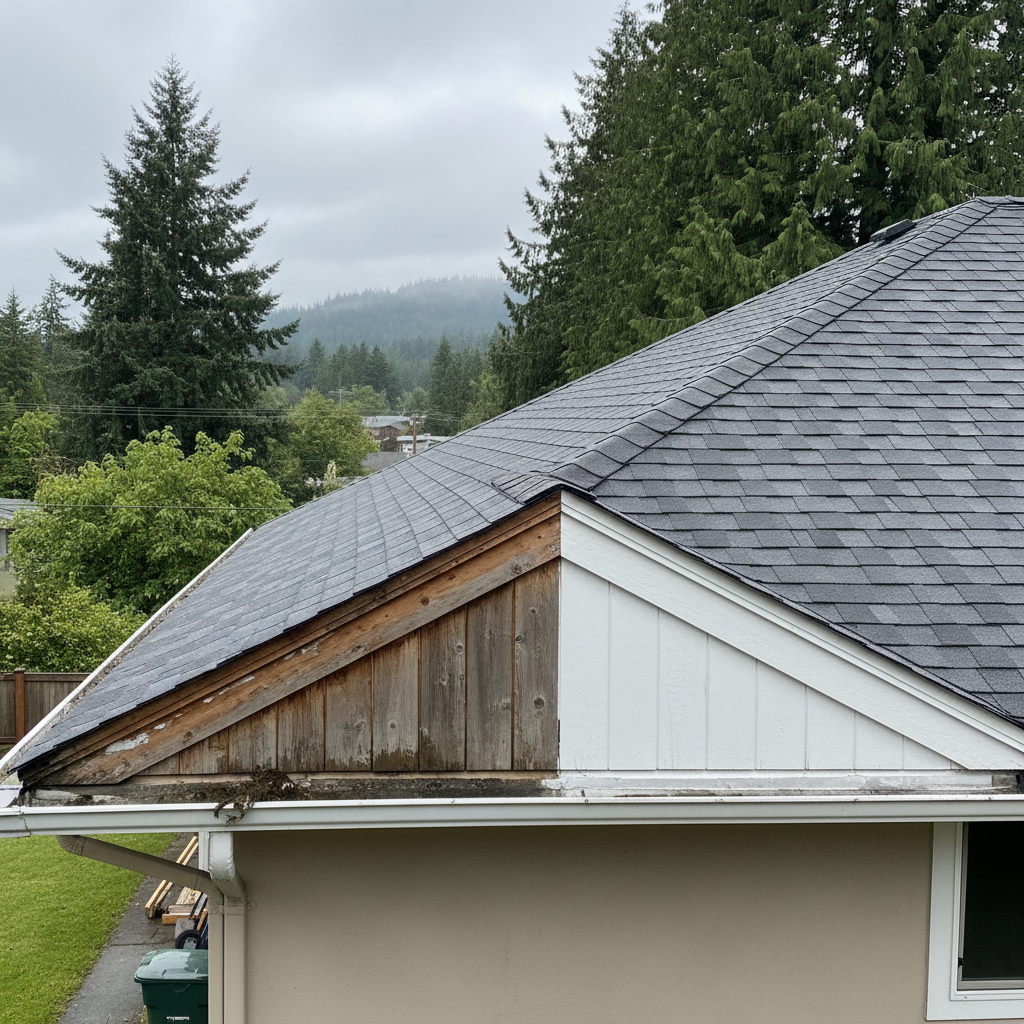
Spot patching a roof leak versus tearing out and rebuilding the damaged section is a choice homeowners face in Tenino. When you find a brown ring spreading across your drywall or notice a musty smell in the attic after one of our relentless South Sound downpours, the urgency sets in fast. You just want the water to stop. But how you fix that breach in your roofing system matters a lot, especially when dealing with the local climate where annual rainfall routinely pushes past fifty inches. Here is a straight look at how these two approaches compare on cost, durability, and upkeep.
The Spot Patch Approach
A spot repair usually involves sliding in a new shingle or two, flashing a compromised pipe boot, or globbing fresh sealant around a valley where water has found a way inside. The biggest draw here is upfront cost. You do not pay for a massive crew or a dump trailer in your driveway for three days. It takes an hour or two, and your wallet breathes a sigh of relief.
Spot repairs are a gamble against our regional weather. Around Thurston County, moss loves to colonize damp shingles, and winter winds test every square inch of your roof assembly. When you patch a single leak on an aging roof, you are treating the symptom, not the condition. West Harbor Restoration Inc has gone out to homes near the Tenino City Park where a homeowner paid for a cheap patch job six months prior, only to have water migrate three feet over and punch through the ceiling during the next big November storm because the surrounding underlayment was already rotten. If your roof is past middle age, a patch is usually just buying time.
The Section Rebuild Approach
The alternative is cutting out the compromised section entirely. This involves tearing down to the plywood decking, replacing any soggy or rotted fir, installing modern ice-and-water shield, and laying down fresh matching materials. This route hits your bank account harder right out of the gate. There is no denying that. You are paying for materials, labor, and proper disposal.
However, the durability you get from a proper section teardown is night and day compared to a surface patch. When we open up a roof deck around here, we frequently find that moisture has been tracking along the rafters for months. Fixing it right means removing that compromised wood so mold does not take root in your attic. It looks cleaner from the curb, too, because you are not left with a mismatched patch of new shingles glaring against weathered surroundings. West Harbor Restoration Inc often recommends this route when the leak stems from chronic flashing failures or structural valley issues that simple sealants will never truly cure.
Making the Call in Western Washington
If you are trying to decide which path to take, look closely at the age of your roof and the history of the leak. If it is a brand-new roof where a single windstorm ripped off a tab, patch it and sleep easy. But if your shingles are over fifteen years old and have taken a beating from years of local moisture, a patch is usually throwing good money after bad. Spend the extra upfront for a real section repair, keep your gutters clean of the local fir needles, and keep your home dry through the wet months.